Wednesday, April 29, 2015

Guest student post: Eastern Massasauga Rattlesnake by Roberto

Eastern Massasauga Rattlesnake (Sistrurus catenatus catenatus)
Eastern Massasauga (Sistrurus catenatus) Photo by Mike Redmer, USFWS

http://labs.russell.wisc.edu/zuckerberg/research/climate-change-vulnerability-assessment/
Systematics
The eastern massasauga is actually considered a subspecies of the species S. catenatus, with the other two being the desert (S. c. edwardsii) and western (S. c. tergeminus) massasauga rattlesnakes. They belong to the order Squamata and family Viperidae (vipers and pit vipers).

Ecology
1http://www.machac.org/project_categories/featured-project/

The eastern massasauga ranges from central New York and western Pennsylvania all the way through to Ohio, southwestern Ontario, Michigan, Indiana, Illinois, southern Wisconsin, eastern Iowa, southeastern Minnesota, and central Missouri. In PA, this rattlesnake inhabits a couple of different habitats depending on the season, from open fields to remnant prairies and shallow, open wetlands. During the winter, they will find and burrow into previously dug-out tunnels and holes made by crayfish and moles in the rush-sedge marshes and mixed forbs. Adult eastern massasaugas prey on small mammals, typically rodents including meadow voles, short-tailed shrews, and white-footed mice, but it may eat the occasional nesting bird or frog. Broods average at about seven young every 2-3 years from mid-August to September, but the brood can range from 3-19 snakes. It takes anywhere from 2-4 years to reach sexual maturity, but it’s lifespan can exceed 20 years.
Parkhill Prairie crayfish burrow                                           
              
http://www.arkive.org/parkhill-prairie-crayfish/procambarus-steigmani/image-G98970.html and http://www.fcps.edu/islandcreekes/ecology/meadow_vole.htm
Reproduction
Mating seems to occur in late July/August, with females giving birth to live young the following August/September. Males compete for the females during the summer, and a female will store deposited sperm until after hibernation in the spring.  During gestation, the females will often bask in exposed areas with little to no vegetation. The young actually develop in eggs, but the eggs hatch while still within the female’s body, so the snakes come out as live young.

Threats
The main threat to the eastern massasauga population in PA is habitat loss driven by human activity and natural forest succession. Wetland habitats that would be used for overwintering are drained for farms or flooded, while forests reclaim the fields and prairies used for food and reproduction. Eastern massasaugas are not distance travelers, so they require the fields and wetlands close to prairies. Towns, roads, and farm fields prevent migration between the areas for the snakes, isolating them to small populations that ultimately die off. To a lesser degree, the population was also affected by the outright killing of eastern massasaugas by people because of their venomous capabilities. At one time, many states had bounties on rattlesnakes like the eastern massasauga, showing how much people went out of their way to kill them.

Management
In order to save the species, areas with surviving populations should be secured and managed, with a goal of increasing habitat area. Succession of woody vegetation should be controlled so that the habitat is not lost, and secured areas should mitigate any harmful effects done by human activity on the eastern massasauga or the habitat. Precautions should be taken, like analyzing the impact a project might have on the population beforehand. Additionally, education services providing accurate information on the importance of eastern massasaugas meant for dispelling any previous inclinations of the snake should be implemented, as people tend to focus on the venom it carries and not the role it has in the environment.

References


Climate Change Vulnerability Assessments." Zuckerberg Lab. N.p., 20 Dec. 2013. Web. 18 Mar. 2015. <http://labs.russell.wisc.edu/zuckerberg/research/climate-change-vulnerability-assessment/>.

"Eastern Massasauga Rattlesnake." USFWS: Eastern Massasauga Fact Sheet. U.S. Fish and Wildlife Service, n.d. Web. 18 Mar. 2015. <http://www.fws.gov/midwest/endangered/reptiles/eama/eama-fct-sht.html>.

"ITIS Standard Report Page: Sistrurus Catenatus Catenatus." ITIS Standard Report Page: Sistrurus Catenatus Catenatus. U.S. Fish and Wildlife Service, n.d. Web. 18 Mar. 2015. <http://www.itis.gov/servlet/SingleRpt/SingleRpt?search_topic=TSN&search_value=209510>.

Meadow Vole." Meadow Vole. FCPS, n.d. Web. 19 Mar. 2015. <http://www.fcps.edu/islandcreekes/ecology/meadow_vole.htm>.

"Parkhill Prairie Crayfish Photo." Procambarus Steigmani. N.p., n.d. Web. 20 Mar. 2015. <http://www.arkive.org/parkhill-prairie-crayfish/procambarus-steigmani/image-G98970.html>.

"Pennsylvania Amphibian and Reptile Survey." MACHAC. MACHAC, n.d. Web. 19 Mar. 2015. <http%3A%2F%2Fwww.machac.org%2Fproject_categories%2Ffeatured-project%2F>.

Brittingham, Margaret C., Timothy Maret, and Joseph Merritt. Terrestrial Vertebrates of Pennsylvania.  Ed. Michael A. Steele. Baltimore: Johns Hopkins University Press, 2010. Print.

Student Guest Post: Loggerhead Shrike by Jordan Nevius


Loggerhead Shrike (Lanius ludovicianus)
http://scottsimmons.smugmug.com/DailyShoots/2011-11-19/i-NjHtnLk/0/L/IMG2641-L.jpg


Systematics
  • Kingdom - Animalia
 Phylum - Chordata
   Class - Aves
     Order - Passeriformes
       Family - Laniidae
         Genus - Lanius
           Species - L. ludovicianus
Ecology
  • Geographic Range – The Loggerhead shrike ranges throughout most of North America from southern Canada to southern Mexico, but their range is decreasing at an alarming rate. It is believed that this species does not have any breeding populations in Pennsylvania and other New England States because of the conversion of forests and pastures to farmlands and increased urbanization.
  • Habitat— Loggerhead shrikes live in open country grasslands with short vegetation and small shrubs or low trees. Shrikes tend to build their nests in thick trees or shrubs with thorns in order to serve as protection. Some examples include agricultural fields, pastures, desert scrublands, savannas, prairies, golf courses, and cemeteries. Loggerhead Shrikes are often seen along mowed roadsides with access to fence lines and telephone poles.
  • What they eat— Loggerhead shrikes are amazing hunters. They consume insects, small mammals, songbirds, snakes, frogs, and lizards. Shrikes hunt from perches like fence posts and telephone wires high above their habitat to look for prey. When shrikes have spotted their prey, they aerial dive to pounce on it to kill it. In addition shrikes lack talons, so they have a tendency to use thorns and other sharp objects to impale their prey. They use these sharp objects as a placeholder for their prey while they feed on them.


Reproduction
  • This species tends to be an early breeder from the month of February until about July. The female will lay a clutch with about 1 to 9 brown spotted eggs and will incubate them for 2 weeks until they hatch. During this time the male will be the sole provider, hunting and bringing back food to the mother. Shrikes may possible have 2 to 3 clutches a year. After the eggs have hatched, the chicks will remain in the nest for 2 to 3 weeks in which they will begin to become independent and “fly the coop”. A year after birth is when shrikes become reproductively mature and are able to breed.
Threats
  • Exact threats of the Loggerhead Shrike are unknown. It is believed that their decline is attributed by factors of deforestation, conversion of pastures to agricultural crops, and the use of pesticides in which are negatively affecting their nesting habitat. Along with deforestation, the removal of shrubs and hedges, which support their nests, have been cleared in the process. This eliminates the number of breeding sites for shrikes. An additional cause of shrike decline is due to collisions with cars since their habitat is frequently found near highways.  
Management
  • According to the IUCN the Loggerhead shrike is at the status of Least Concern. Measures are still being taken to ensure that its nesting and breeding habitats are conserved. This includes retaining pasture habitats and other suitable trees and shrubs that shrikes tend to build nests in. In Pennsylvania, the recent shrike population is noticeably declining, so their areas of breeding are being taken into consideration so that they are not completely eradicated from the area. In Canada, the Eastern Loggerhead Shrike Recovery Program is restoring its habitat, monitoring its populations, and undertaking a captive breeding program by releasing captive-bred individuals into the wild. The results have so far been positive, with the wild population now increasing.
References/ Works Cited
  1. www.allaboutbirds.org/guide/Loggerhead_Shrike/id
  2. www.arkive.org/loggerhead-shrike/lanius-ludovicianus/video-00.html
  3. www.birds.nature4stock.com/?page_id=672
  4. www.birdweb.org/Birdweb/bird/loggerhead_shrike
  5. Brittingham, M.C. , Maret, T.J. , Merritt, J.F. , Steele, M.A. 2010. Terrestrial Vertebrates of Pennsylvania: A Complete Guide to Species of Conservation Concern. 123-126. “Loggerhead Shrike.” The John Hopkins University Press.
  6. www.conservewildlifenj.org/species/fieldguide/view/Lanius%20ludovicianus%20migrans/
  7. www.ian.umces.edu/imagelibrary/displayimage-126-3473.html
  8. www.learnoutdoorphotography.com/2011/11/loggerhead-shrike-meets-grasshopper.html


http://birds.nature4stock.com/wp-content/uploads/2009/02/lanius-collurio-dscn0434.jpg


Related Posts 
Peregrine Falcon
Upland Sandpiper
Indiana Bat
Northern Brook Lamprey 

Loggerhead Shrike

Student Guest Post: Northern Brook Lamprey by Bobbielynn Richarchson

Title: Northern Brook Lamprey Ichthyomyzon fossor
http://www.fishwisepro.com/pics/JPG/024440F000112W000002.jpg
http://www.fishwisepro.com/Pictures/details.aspx?Zoom=True&SId=24440&PictureId=2


Systematics:
Kingdom- Animalia
Phylum- Chordata
Class- Cephalaspidomorphi
Order- Petromyzontiformes
Family- Petromyzontidae
Genus- Ichthyomyzon
Species- I. fossor


There are 31 species of lamprey found in the world. Several of these species are threatened. However, the focus will be on the genus Ichthyomyzon, which has six species: I. bdellium, the Ohio lamprey, I. castaneus the chestnut lamprey, I fossor, northern brook lamprey, which is the focus of this discussion. I. gagei the southern brook lamprey, I. greeleyi the mountain brook lamprey also known as the Allegheny brook lamprey. And I. unicuspis or the silver lamprey (Minnesota Department of Natural Resources, 2015).
The northern brook lamprey, can grow to six inches in length with an eel like body shape without scales. They have small, almost nonexistent eyes and seven pairs of gills. And a continuous dorsal fin. In this species they have small, rounded teeth in a sucker like mouth. Many of these species are very similar in appearance, but have little traits that differentiate them from the northern brook lamprey. The adult chestnut lamprey and silver lamprey are distinguishable by their sharper and longer teeth (Government of Canada, 2010). Unlike some other lamprey species however, the northern brook lamprey is not parasitic during any of its life stages. The larvae are filter-feeders, consuming microscopic plant and animal life and decaying matter. Adults have a non-functional intestine and do not feed at all, living only on what was consumed in its larval stage. (Ministry of Natural Resources and Forestry, 2012).


Ecology:
http://www.dnr.state.mn.us/rsg/profile.html?action=elementDetail&selectedElement=AFBAA01030
The northern brook lamprey is found in small rivers and streams across the northeast part of the United States and parts of southeast Canada. Found in Pennsylvania only in a small portion of the northwest part of the state (Pennsylvanian Fish and Boat Commission, 2015). They prefer cool water streams, with a soft substrate like silt for the larval stage which are filter feeders. Adults have no digestive system at all and rely on the food stores collected during growth of their larval stage. Adults are typically found over coarse substrate, sand or gravel, in swifter waters, riffles, or runs. Larval stages are found burrowed in fine sediment or organic debris in side channels or other quiet water in areas with embedded woody debris (Minnesota Department of Natural Resources, 2015).
They are a major source of food with predators like rainbow trout, brown trout and rock bass. And because they are a non-parasitic species they pose no threat to freshwater fish or people. Economically, they have been used as bait in the past, but otherwise have no use to humans.
Reproduction:
http://www.oocities.org/surfergirl192001/Life_Cycle.html
Spawning occurs in May and June and individuals becomes sexually mature at around six years. The males use the soft silt and small pebbles using their sucker like mouth to create small nests. These nests take the form of shallow depression in the substrate on the bottom of the stream. Up to 30 lamprey may spawn together in one area. They will lay up to 1000 sticky eggs are deposited in the nest and adhere to the substrate. (Ministry of Natural Resources and Forestry, 2012). After reproducing, like many fish species, the lamprey will die a few days later. Eggs take two to four weeks to hatch into the larval stage which are free swimming and begin feeding to build up the nutrients required as adults during mating. (Karvel-Fuller, B. 2013.)
Threats:
The use of lampricides for the control of the invasive sea lamprey (petromyzon marinus) including lampricide TFM (3-trifluoromethyl-4-nitrophenol) kills larvae before they develop lethal mouths and migrate to the lakes to feed on fish. Unfortunately this treatment also kills nonparasitic species like the northern brook lamprey. And bayluscide a liquid or powdered form of this can be used alone or combined with TFM to reduce the amount needed during treatments. Both can also have negative effects on amphibians and some freshwater fish (Government of Canada, 2010).
Pollution and changes in water levels and temperature have made it difficult for eggs to develop and hatch properly, dropping the already low survival rate of larval stage lamprey. Habitat degradation along stream beds is also a problem as it removes the substrate that the lamprey need for reproduction. Most is caused by humans thanks to aggricultureal runoff and erosion of stream banks that cause water levels to drop and temperatures to rise with larger surface areas (Karvel-Fuller, B. 2013).


Management:
Habitat protection is the only management system used, although only generally, as they aren’t considered economically important. Because of this the species despite being endangered has been ignored by different species protection agencies. There are relatively simple things that can be done to help maintain populations.
By building up and maintaining plant buffers it is possible to avoid contamination from agricultural areas. One of the best ways to do this, and it is a cheap solution that can be implemented by both farmers and agency official, employing best management practices for around freshwater streams. This includes planting native plants to stop erosion and help filter runoff, and also the creation of stream zones that are left undisturbed to give optimum condition for the lamprey.
Watershed management is also necessary to protect the undisturbed habitat and water quality required by the northern brook lamprey. Frequent testing of water for safety is recommended, if issues arise the buffer system can be implemented. Control of lamprisides, and pollutants that effect sensitive freshwater organisms is also going to be a major challenge in protecting this species. By implementing non-chemical means of control like lamprey walls, which collect sea lampreys but have spaces for smaller species to swim through, or hand collection, it will increase survival of the species (Karvel-Fuller, B. 2013).


References:
Government of Canada, 2010.  Aquatic Species at Risk - The Northern Brook Lamprey (Great Lakes –
Upper St. Lawrence). Fisheries and Oceans Canada. Accessed March 10, 2015. http://www.dfo-mpo.gc.ca/species-especes/species-especes/lamprey-lamproie-eng.htm
Pennsylvanian Fish and Boat Commission, 2015.  Gallery of Pennsylvania Fishes. Lampreys. Accessed
Ministry of Natural Resources and Forestry. 2012. Species at Risk. Northern Brook Lamprey. Accessed
Minnesota Department of Natural Resources, 2015. Ichthyomyzon fossor (Northern Brook Lamprey).
Karvel-Fuller, B. 2013. "Ichthyomyzon fossor" (On-line), Animal Diversity Web. Accessed March 10, 2015

Student guest post: Indiana Bat by Kate Shafer

Indiana Bat  (Myotis sodalis)


SYSTEMATICS:
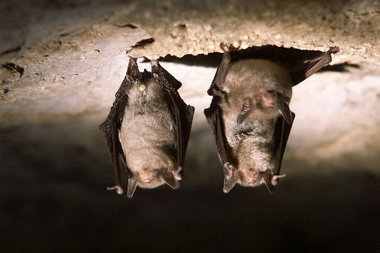
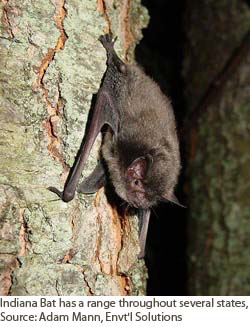
The Indiana Bat got its common name from the type specimen that was first found in the Wyandotte Cave in Indiana in 1904.  They belong to the order Chiroptera and the family Vespertilionidae.  Members of this species are one of many in the genus Myotis, which means “mouse ear”, and is used to describe their small mouse-like ears.  The Indiana Bat closely resembles the little brown bat (Myotis lucifugus), but differs in its greyish brown coloration instead of bronze.  Biologists can distinguish this species from other bats by their feet, which are smaller and more delicate that their relatives with a distinctive keeled calcar.  A keeled calcar is a foot spur composed of cartilage that supports the membrane between the foot and tail. The presence of fewer shorter hairs on the hind feet and its pink lips are also distinguishing characteristics of the Indiana Bat (Engel, James 1976)
The species richness of the Indiana Bat has declined over the years.  The most recent estimate of the total populations of Indiana Bats in the U.S. was about 457,000 individuals and was done in 2005.  This population estimate is half the amount that was present when the species was listed as endangered in 1967.  Studies in 1985 have estimated the total known past population of Indiana Bats in Pennsylvania to be around 5,000.  The most recent count in 2007 showed a great decrease in species richness with only 774 individuals in Pennsylvania.   (Steele, et al. 2010)


ECOLOGY:
The Indiana Bat is found in most of the Eastern U.S. ranging from Oklahoma and Wisconsin, East to Vermont, and South to Florida.     They are most commonly found hibernating in caves in Southern Indiana, where almost half of the population is located (207,000 in 2005). This species has been found to be more abundant in New York, Missouri, Kentucky and Illinois, all of which had populations greater than 40,000.
The Indiana Bat hibernates from autumn to spring, and have both winter and summer habitats.  Hibernacula consist of limestone caves and abandoned mine shafts, and have certain requirements for hibernation.  This species requires cool, humid hibernation sites with temperatures that are cool but remain above freezing, averaging about 37-43° F in mid-winter.  There are very few sites within the species range that have these conditions.   M. sodalis hibernates in clusters, sometimes with other species such as the little brown bat and northern-long eared bats.


In the summer, Indiana Bats generally roost in the trees of flood-plain and upland forests, and are usually found under the loose bark or in the cavities of dead or dying trees.  Females occupy roost sites of up to 100 females, called maternity colonies, while males roost in smaller groups near the females.  Maternity colonies must maintain a certain temperature, and for this reason females have a primary roost site and an alternate roost site.  Primary roost sites are located in areas that contain a lot of sun such as openings or near the edge of forests, and alternate roosts sites can be located in forests interiors and have cooler temperatures.  Some Indiana Bats have been found roosting in urban areas, such as in attics or garages.  The Indiana Bat’s diet consists of flying insects such as moths and mosquitoes, and trees along streams or open bodies of water are common foraging areas.  


REPRODUCTION:
M. sodalis are polygynous, meaning one male will mate with multiple females.  Indiana bats mate during the “fall swarming” period, which is in late October right before they enter hibernation.  Females will store sperm through the winter and become pregnant in early spring when they occupy maternity roosts.  Females give birth to one pup per year, and on rare occasions they will have two pups. The young bats are nursed by the mother, and stay in maternity colonies for remainder of the first summer, becoming fully independent in about 2 to 3 months.  


THREATS:
Indiana bats are listed as a federally endangered species, and are also listed as a Pennsylvania state endangered species.  One of the main threats to this species is habitat disturbance, particularly during hibernation.  Since this species hibernates in relatively large numbers, they are sensitive to disturbances such as human entry, which causes bats to wake up and use up stored energy that is required for survival during the winter.  Loss of habitat has an effect on the foraging areas during the summer months, which can lead to less energy and stored fat when re-entering hibernation.  Because of these common disturbances, many Indiana bats have adapted to man-made structures for their hibernation sites.  Unnatural predators such as feral cats also pose as threats to Indiana bats.  Another major threat to Indiana bats, as well as many other bats is White-Nose syndrome (WNS).  WNS is an infectious fungal disease that emerged in 2006 and is responsible for high mortality rates in hibernating bats.  The fungus invades the skin of hibernating bats, and grows on the nose, wings and ears.  Invasion of the fungus affects the physiological processes of bats while in hibernation, and causes rare and potentially fatal behavior such as leaving hibernacula during the cold winter months.  The most recent account of Indiana bats affected in Indiana revealed a 16% decline in species due to WNS in 3 winters (DNR 2014).


MANAGEMENT
The Indiana bat is a challenging animal to study due to its mobility and nocturnal habitats.  This species is protected under the Federal Cave Resources Protection Act of 1988, and one of the most common management practices is the protection of hibernacula, which includes placing bat-friendly gates in front of caves where there are hibernating bat populations.  More summer habitats including roosts, foraging areas and also migration routes need to be identified.  Since summer roosts aren’t permanent, the use of artificial roosts has been considered and known maternity roosts should be protected.  Continued research is needed, such as monitoring bat populations at known roosting sites and hibernacula. The US Fish and Wildlife Service continues to monitor their behavior, including their roost preferences and distribution through radio telemetry and mist netting projects (USFWS, 2006).
REFERENCES:


  • "ITIS Standard Report Page: Vespertilionidae." ITIS Standard Report Page: Vespertilionidae. N.p., n.d. Web. 24 Apr. 2015. <http://www.itis.gov/servlet/SingleRpt/SingleRpt?search_topic=TSN&search_value=179986>.
  • Steele, Michael, et al Terrestrial Vertebrates of Pennsylvania. 1st ed. N.p.: John Hopkins UP, 2010. Print.
  • "Indiana Bat (Myotis Sodalis)." USFWS: Indiana Bat (Myotis Sodalis) Fact Sheet. N.p., Dec. 2006. Web. 24 Apr. 2015. <http://www.fws.gov/midwest/endangered/mammals/inba/inbafctsht.html>.
  • "Indiana Bat." Wikipedia. Wikimedia Foundation, n.d. Web. 24 Apr. 2015. <http://en.wikipedia.org/wiki/Indiana_bat>.
  • Engel, James M. The Indiana Bat, Myotis Sodalis. Washington, D.C.: G P O, 1976. Web. 24 Apr. 2015. <http://www.state.nj.us/dep/fgw/ensp/pdf/end-thrtened/indianabat.pdf>.
  • "Indiana Department of Natural Resources." DNR: White-nose Syndrome in Bats. N.p., n.d. Web. 24 Apr. 2015. <http://www.in.gov/dnr/fishwild/5404.htm>.

Related Posts 
Peregrine Falcon 

Student guest post: Upland Sandpiper by Olivia Questoire


Upland Sandpiper (Bartramia Iongicauda)

Systematics:
Kingdom: Animalia Phylum: Chordata Class: Aves
Order: Charadriiformes Family: Scolopacidae
Genus: Bartramia Species: B. longicauda

Ecology:
The Upland Sandpiper, B. longicauda, is a small bird characterized by its long neck, small head, straight bill, long legs, and large eyes. These birds may live up to 4-5 years, the oldest banded bird living 5 years. They are most commonly found in grassland type habitats spanning all of North and South America. Commonly, in the North, Sandpipers, are found nesting at airports. They prefer dry grasslands opposed to wetlands. Their diet is composed of many different insects such as weevils, beetles, grasshoppers and crickets. The Uplands Sandpiper is known for its ground foraging behavior, in which it walks the land preying on insects as it goes. The nest of the Sandpiper is uniquely built into the ground approximately 4 in x 2in and remains either unlined or built up with twigs and leaves. Sandpipers have the tendency to prepare more than one nest, but then only utilize one of them. Upland Sandpiper’s are migratory birds, moving form North to South America during the winter. They spend approximately one month in South America before returning to the North for the Summer months.

Reproduction:
Upland Sandpipers begin to reproduce late April into early May. During courtship, males are commonly known to fly high above females in big circles with their wings outstretched. They ideally mate in grasslands, meadows, prairies, and if need be, wetlands. Breeding areas span anywhere from central Maine to west Canada, southern Alaska to north Texas and over east to central Tennessee. Clutches tend to be composed of 2-7 buff dark spotted eggs. The eggs are incubated by both parents for approximately 21-29 days post laying. Chicks are capable of leaving the nest and feeding themselves almost immediately after hatching. Birds are approximately one year old when they begin to mate. A pair will remain together for approximately one week post eggs hatching, and then the female leaves.

Threats:
B. longicauda, is considered to be a state endangered bird. This is most commonly due to hunting and decreased habitat from the 19th century. The transition of native grasslands to croplands in both North and South America has caused populations to fall. Additionally, as the Passenger Pigeon population fell, hunters turned to the Upland Sandpiper for additional game birds. In Argentina and Paraguay, it has been established that pesticides have been an important factor in the population decline of the Upland Sandpiper, which may additionally, be a contribution to the decline of species in the U.S.
Management:
Currently, it is estimated by the Canadian Wild Life Service that the Upland Sandpiper’s population is approximately 350,000 in total. Most are currently residing in the Great Plains, where they are not considered endangered. Although it is probable they were never abundant in the Northeast, their numbers are dwindling, as well as in the West, with the loss of native grassland habitat. In 1984 Ohio State researchers began encouraging airports to maintain proper management techniques which support the Sandpiper’s living styles in effort to promote dwindling populations. In 2010, the U.S. Shore Bird Conservation created a plan to help restore Upland Sandpiper population. This included raising populations to 126,000 birds in the East by maintaining grazed lands on private cattle ranches, protect large tracts of suitable or potential nesting habitat, manage public grasslands for birds, and provide incentives for private grassland conservation. Currently, in New York efforts to conserve and grow the population is mainly focused on conserving native grasslands.
pland Sandpiper Range Map
References
"Upland Sandpiper." , Identification, All About Birds. N.p., n.d. Web. 15 Mar. 2015.

"DEEP: Upland Sandpiper Fact Sheet." DEEP: Upland Sandpiper Fact Sheet. N.p., n.d. Web. 16 Mar. 2015.

Osborne, David R., and A. T. Peterson. "Decline of the Upland Sandpiper (Bartramia, Longicauda) in Ohio: An Endangered Species." Decline of the Upland Sandpiper (Bartramia, Longicauda) in Ohio: An Endangered Species. Ohio State, Mar. 1984. Web. 24 Apr. 2015.

"Disclaimer." Upland Sandpiper Fact Sheet. N.p., n.d. Web. 27 Apr. 2015.

Vickery, Peter D., Daniel E. Blanco, and Bernabe Lopez-Lanus. "Conservation Plan for the Upland Sandpiper." (n.d.): n. pag. Www.whrsrn.org. Western Hemisphere Shorebird Reserve Network, Feb. 2010. Web. 25 Apr. 2015.

Related Posts 
Peregrine Falcon