Sunday, May 17, 2015

2015 Research Week 1

Last week the summer of 2015 research season began. It was a slow start with only two items: my Fenner scholar, Amanda S., and I went to Trumbauer Farm in and the Penobscot Bike Trail to reconnoiter and then to the Jacob's Property to see how the gas pipeline widening was going. 

Trumbauer Farm is enrolled in CREP and is planted in warm season grasses and some other herbaceous species. We were there on Tuesday. The place was hopping for breeding birds. Every box had something going on. On the downside, overall diversity is low there. 


Chestnut-sided Warbler - loves edges

Eastern Bluebird nest 

Eastern Bluebird chicks

Tree Swallow nest 

Getting the eye from a Tree Swallow

The next stop was the Penobscot Bike Trail in Newport Township. This is one of my favorite sites - diversity is very high (but I can find nests there). We only spent 20 minutes at the site. The most notable thing was the absence of Grasshopper Sparrows and the noisy Yellow-breasted Chat. Let's hope they show up next week when I'm doing my survey. After checking out the site, Amanda and I went to Coffee's Coffee in Nanticoke - a nice gem in that town. 

Indigo Bunting 
Prairie Warbler 

Tent Caterpillars - every cherry tree had several of them

A souvenir from the site
Then Thursday, we went to the Jacob's property that Wilkes owns on HWY 115. We were there to plant five American chestnuts and to check out the pipeline that was being expanded. 


Dr. Fetcher and Klemow and Amanda planting a chestnut seedling 


Gaywings

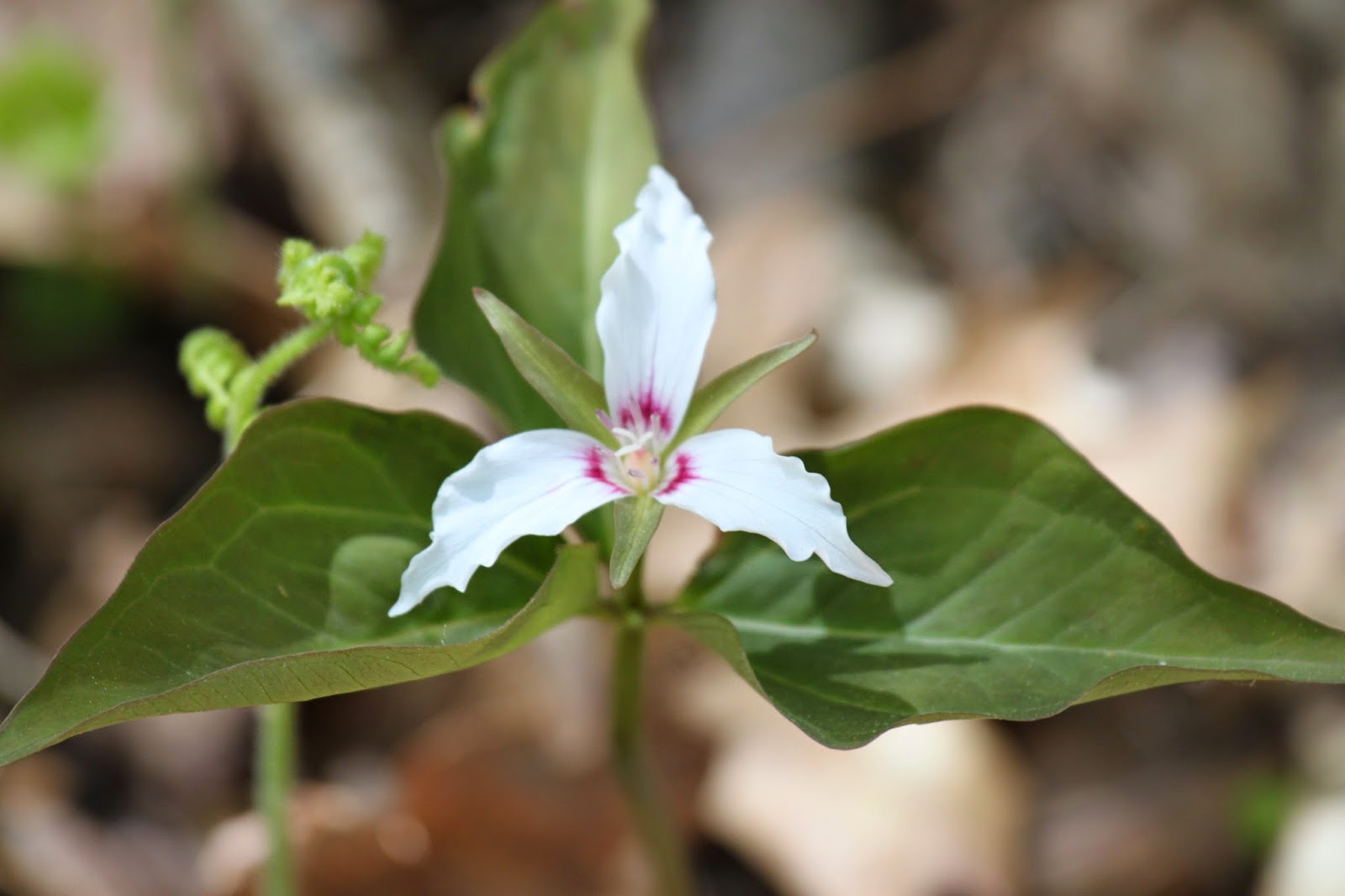
Painted Trillium

Natural gas pipeline

Our pond - complete with cranberries 

Violets


This week in urban birds

South Wilkes-Barre is buzzing with breeding birds and a few good migrants.

This week had the first Common Nighthawk pass through. Hopefully, they'll take to the green roof on top of the Cohen Science Center. Speaking of, the CSC had no window-killed birds for the past few weeks. Very surprising. 

Common Grackles, Starlings, and American Robins are flying through the neighborhood with mouthfuls of food for chicks. The Tree Swallow at the house laid her first egg yesterday afternoon and continue to copulate throughout the day. She only took a few days to build the nest out of materials she found in the yard and street. 


Song Sparrows are also acting like they're feeding chicks but I have yet to find a nest. A female Brown-headed Cowbird was searching our privet hedge and the neighbor's hedge for nests. We planted ornamental Allium (onion) and that had a male Ruby-throated Hummingbird - not seen since that one. 

As for migrants, I can hear Blackpoll Warblers everywhere. I've also been hearing American Redstarts. I'm down to one dog and he's old so my walks are much shorter. Despite that our walks along the tracks (wooded strip about 50 m wide between two developments) picked up Least Flycatcher, Baltimore Oriole, Scarlet Tanager, Yellow-billed Cuckoo, Northern Parula, Red-eyed Vireo, Chimney Swift, and Bay-breasted Warbler - one of my favorite migrants
Crappy shot of a very cool Bay-breasted Warbler

The Peregrine Falcon is still patrolling near Market Street and the Tree Swallows around the Susquehanna have been joined by Rough-winged Swallows


Sunday, May 10, 2015

Avian flu: woe to the midwest chicken

I don't have cable and this hasn't popped on my Facebook news feed but avian flu is raging through midwest farms like early scenes in Stephen King's The Stand (all of humanity is wiped out by a disease save a handful of people).  

Chickens, primarily, but also turkeys and ducks are falling ill and the culprit is HPA1 H5N2. Thousands of birds have fallen ill but the real apocalypse is when we try to get ahead of the disease but obliterating all the poultry at a particular ranch. So far there have been 135 poultry farms affected and over 20 million birds will be euthanized or dead by the time they are to be euthanized (more details here). The economic scope must be huge. This not only affects those giant poultry farms with hundreds of thousands of birds but barnyard flocks. 

I'll have to read up on the epidemiology to see if these are driven by poultry factories or large numbers of small farms. I suspect the former but in either case if the HP (highly pathogenic) strains are here to stay they may change how we farm. 

https://aggiesprite.files.wordpress.com/2011/09/far-side-chicken.png

Wednesday, May 6, 2015

Done.. done with work. Let the work begin!

Grades submitted. I have one letter of recommendation to submit and that's it. I have a meeting with research kids on Friday to go over what we're up to this summer. 

Next week research starts. 

Thursday I am fishing. FISHING!!!  I'll be on the Upper Lehigh throwing a fly at nonexistent trout.  


Monday, May 4, 2015

Insects as artists

In my neighborhood an American elm died from, presumably, Dutch elm disease and dropped some larger branches.  I assume these marks were made by beetle larvae eating the cambium.  My guess is that a number of eggs are laid in dense areas and the grubs grow as they move throughout the cambium. Note the increasing size of the tunnels.  


Friday, May 1, 2015

Student guest post: Sedge Wren by Carley Smith

Sedge Wren (Cistothorus platensis)
Order:Passeriformes
Family:Troglodytidae


Sedge Wren
http://www.powdermillarc.org/highlights/2012/Fall2012.aspx
Global populations of the Sedge Wren are considered secure but breeding populations in Pennsylvania are critically threatened, thus this bird is listed as an endangered species in PA. The most regular and recent sites are in Crawford and Butler county. It is seen as a very rare breeder in the PA state.


Systematic
This species is a shy resident of damp meadows and grasses.  Sedge Wrens generally stay well hidden, coming into view only when singing.  Like some other Wrens, the male builds many dummy nests, only completing the one that the female selects. These dummy nests may serve as dormitories or decoys for predators. They are most commonly located in thick vegetation.They nest in June or July. Sedge wrens are characterized by high mobility during breeding season and low site tenacity between seasons. This wren prefers dense, lush and undisturbed hay fields. They are highly sensitive to habitat conditions and abandoned sites that become too dry or too wet, or where shrubs become too prevalent. Sedge wrens are secretive and unpredictable in their movements.


Similar Wren Friends
The Sedge wren is related to the Marsh Wren who normally inhabits deeper waters. Other wrens with indistinct superciliums are House, Winter and Rock Wrens. Winter Wren is more reddish-brown above, darker below and has a shorter tail. House Wren lacks white streaking on the crown and back and is less buffy on the underparts. Rock Wren is larger with a contrast between the gray back and brown rump and has buffy tips to the tail. 


Identification 
The Sedge Wren is approximately 3.75 inches long with a short, thin bill. Their coloring includes brown upper parts with pale streaks on the back and crown. They have an indistinct supercilious which is a plumage feature found on the heads of some birds. However they do have buffy breast and flanks. The wings and tails of sedge wrens are barred with black.


Ecology
They are Neotropical migrants, summering in the Midwest, eastern Great Plains, and south-central Canada.  Winters occurs along atlantic coast from Maryland through Florida. They can only endure short distance migrations.


They eat mostly insects and spiders. The young are fed moths, spiders, mosquitos, flies, grasshoppers, and bugs.


ADULT: Has reddish buff upperparts overall, with subtle dark barring on tail, more striking dark and pale barring on wings, bold dark and pale streaks on back, and a streaked crown; supercilium is buffy. Underparts are buffy brown overall, but palest and whitish on throat. 


JUVENILE: Similar to adult, but colors and markings are duller overall.


Reproduction
Sedge wren breed mostly in grasslands where they can nest low to the ground. Clutch sizes consist of 4-8 eggs. Incubation occurs for about 12-16 days and then approximately 12-14 days to fledge. They are typically colonial nesters but may also nest as lone pairs.


Threats
The biggest threat to sedge wren populations is the loss of breeding habitat due to the draining of wetlands. They have been effected by intensive mowing practices typical of modern agriculture. Sedge wrens use drier wetlands and grasslands in PA. The state has lost more than 50% of its wetlands. Those wetland types preferred by sedge wrens are the most easily drained or  otherwise modified by agriculture or developmental interests.
Status
Previously listed as a species of special concern, the sedge wren is now considered a endangered species in New York State and Pennsylvania. Once again it is a very rare and local breeder and has experienced population declines throughout its breeding range.The best management practices for the remaining sedge wrens is the implementation of agricultural programs, such as the Conservation Reserve Enhancement Program, that idle grasslands within the state.


References

“Disclaimer." Sedge Wren Fact Sheet. Web. 16 Apr. 2015. <http://www.dec.ny.gov/animals/59556.html>.
“-Sedge Wren." - South Dakota Birds and Birding. Web. 16 Apr. 2015. <http://sdakotabirds.com/species/sedge_wren_info.htm>.
-“Sedge Wren." , Life History, All About Birds. Web. 16 Apr. 2015. <http://www.allaboutbirds.org/guide/Sedge_Wren/lifehistory>.
-“Sedge Wren." Sedge Wren. Web. 16 Apr. 2015. <http://www.mbr-pwrc.usgs.gov/id/framlst/i7240id.html>.
Steele, Michael A. Terrestrial Vertebrates of Pennsylvania: Baltimore, MD: Johns Hopkins UP,  2010. Print