Showing posts with label conservation. Show all posts

Monday, May 31, 2021

2021 Field Season Kick Off - week 1

 Kicked off the 2021 field season with a solo trip to State Game Land 91. This unit was cut at least one year ago. My understanding is that this is a shelterwood cut where the canopy is largely removed with just a few standing trees remaining. The unit can be found off Hwy 115 between Wilkes-Barre and Bear Creek. If you want to see Chestnut-sided Warblers or Prairie Warblers this is your spot! This area might had Golden-winged Warblers but I did not detect one (I didn't do any playback for them either). 


This site this interesting because the groundcover strikes me as the understory of a forested site, with ferns (cinnamon and interrupted shown here) and not cover such as grasses, bracken fern, and goldenrods.  


After SGL 91, I took off to the Wilkes Ecology Preserve to do point counts and get trail camera images. Highlights included a young garter snake and a tree swallow that took up the box I put up a few weeks ago. 

young Garter Snake 
Wooly adelgid on hemlock 

Cinnamon Fern

Interrupted Fern 


Dwarf ginsing

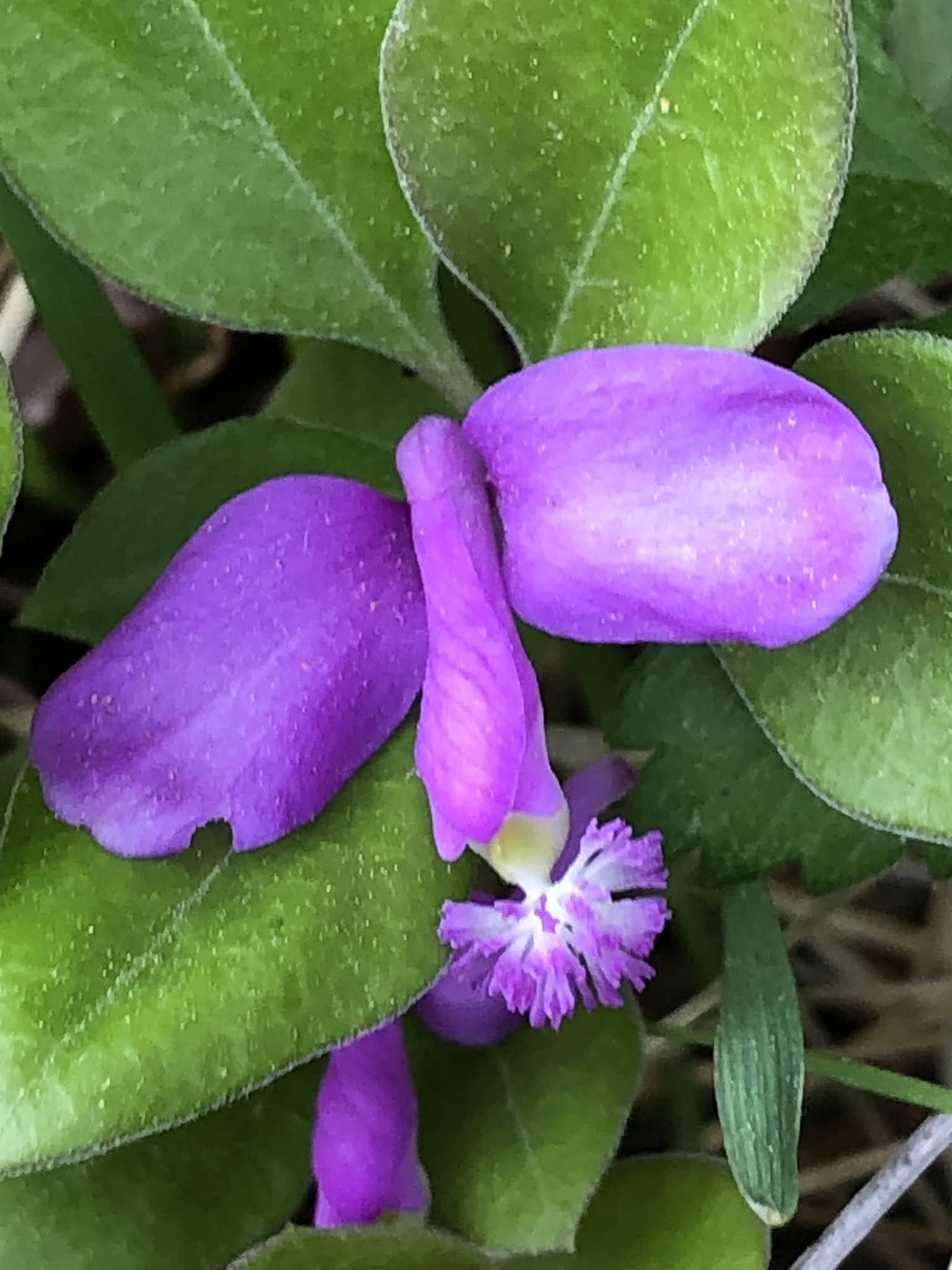
Gaywings 
Red-backed Salamander 


Tupperware containing an Audiomoth unit that was never turned on :\ 
Tree Swallow eggs 

That's it though. One day. A good day. But one day in the field for the whole week. Rain and a hospitalized family member kept me in. Had graduation Sunday and today was Memorial Day. But here's a good week ahead. 

Sunday, May 3, 2020

Tropical Ecology Course Online


Course Description: This course explores ecology and conservation with a focus on tropical forests. 

The textbook: John Kricher's Tropical Ecology

This page: Going to paste links to my lectures, a reading list, and random stuff. Assignments and readings will be through the portal. I'm making this public so anyone can see what is taught in the course. 

Topics 
  • The stage
    • Biomes of the world and their drivers
    • Major habitats within the tropics 
    • Global diversity and history of tropical forests 
  • The players: Tour of tropical diversity 
    • Plants and Forests 
    • Fungi 
    • Invertebrates 
    • Vertebrates 
      • Fish 
      • Amphibians and Reptiles 
      • Mammals 
      • Archosaurs
  • The ecological play 
    • Ecosystem services
    • Nutrient cycling 
    • Disturbances 
    • Predation and coevolution in the tropics
    • Threats to tropical forests 
    • Conservation in the tropics 

Reading list for the tropical ecologist (or enthusiast)

  • Charles Darwin's Voyage of the Beagle - Could be called "Tales of a twenty-year old naturalist" 
  • The Shaman's Apprentice - if you dig ethnobotany, this is a must

Saturday, April 11, 2020

Conservation Biology Online


I've decided to put a large portion of my conservation biology lectures online. They will be slightly less detailed than what I would normally do in class but I will make up for by extra readings. I asked a few of our graduates in graduate school what we were missing and one theme was reading and critiquing the peer-reviewed literature. So that will be part of the course that's for our students but not the public. By what not have public lectures. Maybe I'll get some good feedback. 

As of 4/11 - first two lectures, lecture on threats to tropical forests 

This will be a work in progress.


3. Species and Species Diversity
    
5. Extinctions 


7. Habitat Loss

8. Habitat Fragmentation
    Part 1 and Part 2


11. Invasive Species and Emerging Diseases 

12. Climate Change


14. Threats to Marine Diversity 

15. Global Conservation 

16. Designing Parks 

17. Conservation Law 

18. Habitat Management 

19. Museums, Zoos, Gardens and Freezers

20. Restoration 

21. Funding Conservation 

22. Sustainability  


Friday, August 7, 2015

Summer research week 12

Monday 8/3/2015

Finished off edits of the State Wildlife Action Plans. I volunteers to cover 6 early successional (grassland and shrubland) species of birds and I called for more fire to maintain habitat for these species. Will be interesting to see how that is received.

Tuesday 8/4/2015

Went to Nescopeck State Park to catch birds and set up small mammal traps. Was bloody hot and only captured three birds: 2 Song Sparrow and a Rudy-throated Hummingbird. 


We also need to do tons of vegetation measurements for birds. For me that means structure more than composition (I hope!). Did the first one today with only a few goof ups (like measuring a transect out from the radius and not the diameter so after 10 points there were still 10 to go outside of our plot area). 

Wednesday 8/5/2015

Went toNescopeck State Park for vegetation sampling, small mammals, and birds. The crew has picked up on how to do vegetation sampling so I'm happy with that. We have some 20 small mammal traps out and captured a female meadow vole. We only had two nets out but we captured a Yellow-throated Vireo and a flycatcher that was either an Alder or Willow. 


Thursday 8/6/2015

Last day at Nescopeck State Park. Goal was to finish vegetation sampling at two fields. Done. No small mammals in the small mammal traps. Better luck with the birds. Picked up another hummingbird and we were able to use feathers from the breast that sloughed off. Captured a Field Sparrow at the silo field (there's an actual silo), American Goldfinch, and a Common Yellowthroat. Overall a good day.


Wednesday, January 8, 2014

MY YEAR OF DARWIN (#YEAROFDARWIN)

 Charles Darwin

8 Jan 2014: "I heard Audubon deliver there some interesting discourses on the habits of N.American birds" Darwin autobiography

Darwin's professors would either take students or encourage them to scientific meetings. Publications are the currency of scientific thought and meetings are like the golf outings of science. Deals are made, gossip is exchanged, people are scooped or learn they're about to be (and that is useful too). As a college student Darwin attended a meeting an John James Audubon gave a talk. He must have been famous enough that Darwin didn't think if necessary to include his full name. 

John James Audubon was a celebrated ornithologist during his lifetime and is the namesake of The National Audubon Society. I read one biography of Audubon as a teenager and found him fascinating and I hope to read Richard Rhodes' biography, which I hear is excellent. J.J. Audubon lived in Pennsylvania and there was one of the first banders in North America. He tied a silver thread on an Eastern Phoebe that build a nest on his porch and the bird return to his house the following year. Eastern Phoebes nest throughout eastern North America and winter along the Gulf Coast in winter. Audubon explored North America when there was endemic diphtheria, malaria, and a host of other maladies (but no Lyme or West Nile, either). Audubon produced the over-sized book Birds of North America, wherein birds were painted their actual size. Large birds, like herons, were presented neck bent to fit the pages and small birds were presented with vegetation in the background. I was able to view an original Audubon painting at the Jules Collins Smith Museum of Fine Art at Auburn University. The paintings are amazing with brilliant colors that I've never seen reproduced in any of the prints. I currently have four prints. Interestingly, these were picked out of the garbage in Miami Beach and passed on to me. Below is one print that I really like. 
Red-shouldered Hawks on a gum tree with Spanish moss. 
Audubon's method was shoot, pose, and paint. It worked. Both Audubon and Birds of North America became famous and Audubon followed this work with a book on mammals. 


Monday, August 6, 2012

meow wow WOW! Cat predation on birds and other critters

There are a few studies out on the effect of cats on birds. Nearly all of them show a negative effect of cats on bird populations.  I only came across a single paper by Courchamo and colleagues in 1999 that show a positive influence of cats and this is a modeling paper. 

One of the more interesting studies was Crooks and Soule's investigation of the interaction between cats, birds, and coyotes. Where there are more cats, there are fewer birds.  Where you have coyotes, there are fewer cats.  By analyzing scat, they found that coyotes were eating cats and the assumption was that there were fewer cats eating birds.  But were the cats actually eating birds?

A new study (link to press release) by the University and Georgia and National Geographic's Remote Imagine Department actually show cats catching birds and other animals.  When I say show, I don't mean demonstrate through experiment, I mean there's video! 

How many birds? Their estimate is 500,000,000 birds per year. I'm not sure how they included feral cats, which must kill "professionally" to stay alive.

Will be interesting to see where this gets published and the public reaction.  

COURCHAMO, F., M. LANGLAIS and G. SUGIHARA. 1999. Cats protecting birds: modelling the mesopredator release effect. Journal of Animal Ecology 68: 282-292.

CROOKS, K. R. and M. E. SOULE. 1999. Mesopredator release and avifaunal extinctions in a fragmented system. Nature 400: 563-566.