Monday, May 31, 2021

Summer 2021 Plans

Here are my summer plans... this is like posting New Year's Resolutions 

  • Submit a manuscript on weevil biogeography (done - took 750 lines of code)
  • Submit an opening essay on a virtual volume on Neotropical ornithology (needs to be finished ASAP - read all the papers - a dozen or so - write a collective intro)
  • Submit a revised manuscript of the clay caterpillar paper - rejected from Urban Ecosystems 
  • Submit a manuscript to Ecological Applications on our grassland research (lots of authors - about 80% done) 
  • Analyze the prescribed burning bird stuff (will require the fanciest of statistics - distance, random effects (site), detection probabilities)
  • Submit a manuscript to Northeastern Naturalist on prescribed burning and the effects on pollinators - only yellow pans used so not a very complete paper but still - cool stuff)
  • Add State Game Land 300 to the survey list (has rattlesnakes and is burned)
  • Apply for all permits needed to catch birds 
  • Deploy red, blue, yellow, white pollinator pans in burned and unburned game lands (ideally 30-40 total samples in each at a bunch of game lands)
  • Get weevil DNA barcoding protocols finalized 
  • Get the Ecology course prepped for Fall 
  • Get a data analytics certificate proposal together 
  • Get a trip to Ecuador organized
  • Check out Fulbright\Smithsonian sabbatical support 
  • Apply for Full Professor
  • Keep my mind in one piece 

2021 Field Season Kick Off - week 1

 Kicked off the 2021 field season with a solo trip to State Game Land 91. This unit was cut at least one year ago. My understanding is that this is a shelterwood cut where the canopy is largely removed with just a few standing trees remaining. The unit can be found off Hwy 115 between Wilkes-Barre and Bear Creek. If you want to see Chestnut-sided Warblers or Prairie Warblers this is your spot! This area might had Golden-winged Warblers but I did not detect one (I didn't do any playback for them either). 


This site this interesting because the groundcover strikes me as the understory of a forested site, with ferns (cinnamon and interrupted shown here) and not cover such as grasses, bracken fern, and goldenrods.  


After SGL 91, I took off to the Wilkes Ecology Preserve to do point counts and get trail camera images. Highlights included a young garter snake and a tree swallow that took up the box I put up a few weeks ago. 

young Garter Snake 
Wooly adelgid on hemlock 

Cinnamon Fern

Interrupted Fern 


Dwarf ginsing

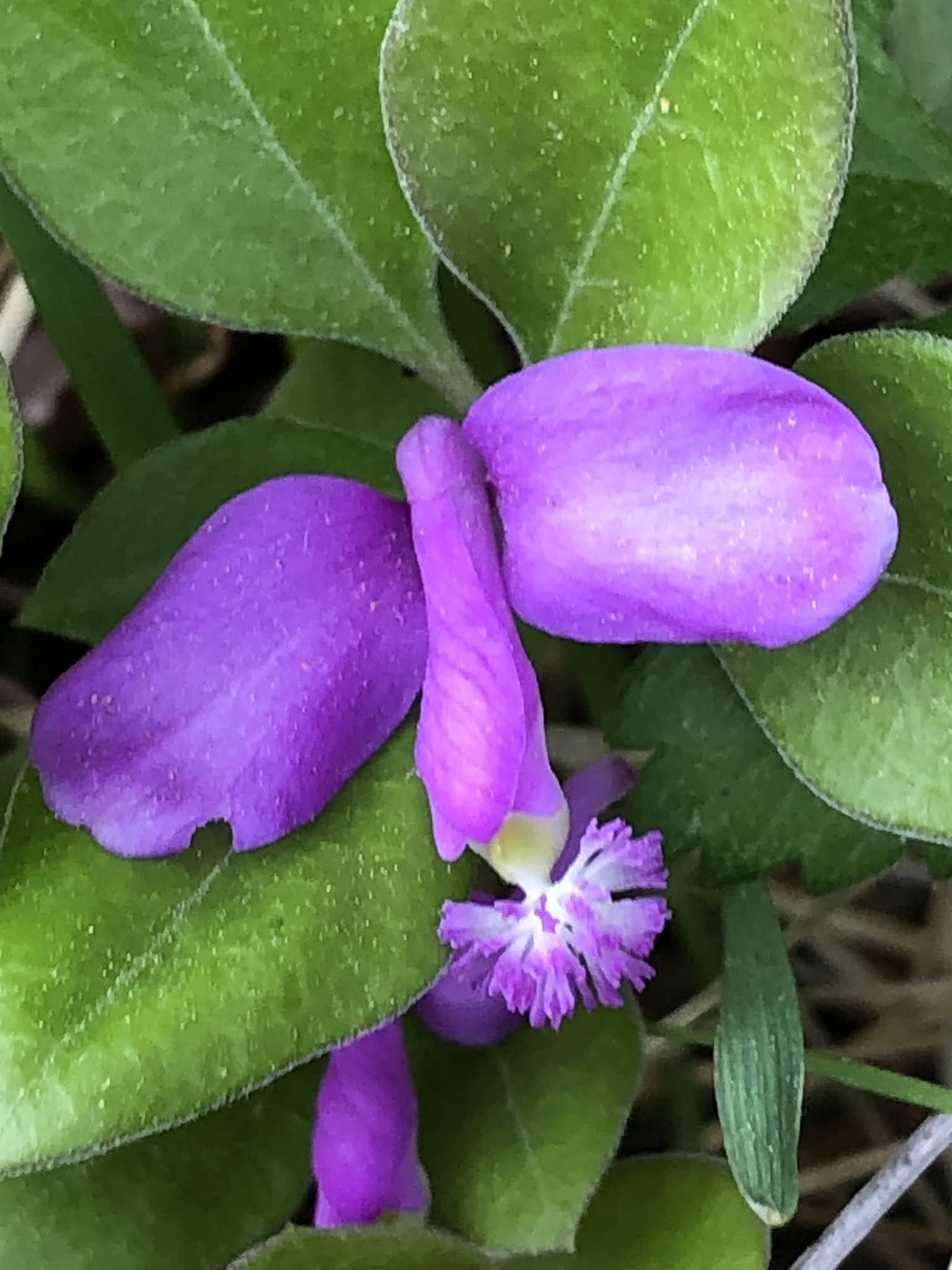
Gaywings 
Red-backed Salamander 


Tupperware containing an Audiomoth unit that was never turned on :\ 
Tree Swallow eggs 

That's it though. One day. A good day. But one day in the field for the whole week. Rain and a hospitalized family member kept me in. Had graduation Sunday and today was Memorial Day. But here's a good week ahead. 

Wednesday, December 30, 2020

Planning 2021

One of the great things about a break is the down time to reflect and plan. I really haven't done either. I did one article review and my brain is not engaging fully. Still, I need to plan. 

Teaching

This spring I'll be teaching BIO 347 Biostatistics and Experimental Design and BIO 298 Economics of Conservation with a colleague from the Poli Sci department. As of now we're scheduled to teach in person but COVID rates are higher than they were in spring. Although vaccines have been approved I don't see widespread vaccine availability until mid-Spring. Just a guess though. One student in Biostats has requested remote teaching so I'll be recording lectures - live or otherwise.  Live recordings ("synchronous") are easy because the camera is just recording me talking and I use my notes that are all ready to go. Asynchronous recordings require much more time - usually about 5 hours of work for 50 minutes of lecture time. 

I'd also like to teach Field Zoology this summer but I'm skeptical it could happen. I haven't thought about it that much. Probably should soon. Also, I'd like to change it to Wildlife Techniques.

The fall semester is still up in the air. I will possibly teach Ecology. If not, I think Archosaurs again.  

Research

This spring I need to focus on DNA barcoding insects. It's gone horribly slow and it just comes down to following directions.  We are also sorting insects from this summer's pollinator pan experiment. 

This summer I need to survey birds in burned and unburned sites on gamelands. If I can have students we'll work at the same sites and catch bugs, birds, and mammals to work out food webs. I'll need to renew a zillion permits. My least favorite thing to work on. 

I'd like to keep with the pollinator study. I started the pollinator project last August and it went exceedingly well. This coming summer I'll add a blue and white plate to the yellow plate I was putting out. Hopefully, by next summer I'll have better wasp ID skills and the barcoding will be down pat. 

Publishing

Clay caterpillar paper is in review. This has four or five students on it (all graduated). This was rejected the first time around and now resubmitted.

I have Ph.D. data I could try to publish on urbanization and birds. I have a ton of post doc data on bluebirds across an urban gradient. Those data are 15 years old. I have the pollinator data we're working on now - that won't be ready for weeks or a few months. There's the prescribed burning data - if anything that needs serious organizing.

Then there's the Wilson Ornithological Society. I'm the chair of the conservation committee and we've been struggling to come up with some initiatives. It looks like most of us want to publish. But what do we publish? Threats to birds? I think I'll put coffee growing forward as a topic and see if this gets some support. 


Thursday, December 10, 2020

Reflections on 2020

Academics

Stretching the brain a bit to go back to the spring. Here's what I remember. We took a number of students to Costa Rica in March for a class. Before the trip, I remember getting promed emails about something happening in China and thinking nothing of it. By the end of the trip people were masked at the airport and furiously wiping down their area. I didn't know if they were over-reacting or I was clueless and underreacting - or a bit of both. 

It wasn't long after we decided to close for two weeks, then to the end of the semester, then we closed until we reopened for the beginning of the fall semester. I was also teaching biostatistics and I recorded a few lectures

This last semester was BIO 225 Population and Evolutionary Biology - I did a third of the class and the all the labs. We had the fewest students - 29 and only two sections of lab. Normally we have three and we did have four sections one year. Table tops had clear plastic sheets separating students and we all wore masks. One student did not want to come in so I worked her into the labs as much as possible. She was recorder when we were taking measurements. Worked to some extent although I firmly believe that learning to handle equipment (e.g., micropipetter and thermocycler, etc) are all handy skills (plus you come to understand the work that goes into research on a very visceral level). The one student submitted her work through the LIVE system and it was just a matter of logging in and checking the work. 

I also had conservation biology. Although it could have been completely in person I recorded a number of lectures. I want to make this course completely online at some point (and add a lab). Something has to give (and now that I can't stay awake past 10 - more has to give) and I let the homeworks slide. Instead of 12 articles to read and answer questions I think they only had 4. That and 3 exams and journal club. I'd give myself a C+ for the course. 

Research 

This summer was about surveying burned and unburned sites in various state game lands. I covered new ground and hit a few sites I surveyed previously. This gives me more controlled data on how communities change through time (on short time scales). A few sites I wasn't able to get to but I hope to this coming summer. This makes the data messy but so it goes. I didn't employ the Wildlife Acoustics units. That was probably a mistake - they work great (but expensive). I also purchased a bunch of Audiomoth units. Much cheaper than Wildlife Acoustics but so far I'm not impressed. In fact, I have to get something recognizable off the units. I think they're really sensitive to moisture. The standard is to put them in a sandwich baggie and cross your fingers. I kid you not. 


I just ordered an acoustic vent, which is a membrane that transmits sound but not water. I have small tuperware containers that I'll drill a hole in and place the vent over the hole. I'll post a pic when completed. 

Towards the end of the summer I realized that I could easily study pollinators with pan traps. These are amazing. Simple, cheap, easy to deploy. A dream, yes?  The problem is the wealth of data you get. 

The picture above was typical of a pan after 24 hours.  That's right - 24 hours. I'll predict we get some 250 species of bee/fly/wasp.  We're also DNA barcoding the insects to see who they are. So far that's been going meh. 

Looks like the standard pan trap deployment is a combination of white, blue, yellow. I definitely want to do this next year so I need to up my pollinator ID skills. We're photographing everything as well but the iNaturalist crew has been slow to ID.  

I did submit a paper with five students as co-authors on Wednesday. Feels good. Years in the making and I had to figure out how to do raster extract in R. Which I did. Need to work on the next thing. 

The next thing... 


Monday, June 29, 2020

Field Season 2020 Week V

6/22/2020 Monday - SGL38
Finding my way around SGL38 and Bethlehem Water Authority I noticed non-burned areas that there cut so I decided to throw these in. I may not be able to find enough to say anything but they are a forest management strategy. A shelterwood cut is a clear cut with a few scattered trees left. At this site in Long Pond, they left oaks and pitch pine. These sites are great for Field Sparrow and Eastern Bluebird. The trees still had Black-and-White Warbler and Red-eyed Vireos. As this site becomes for shrubby, it might host Golden-winged Warblers, Blue Grosbeaks, and Yellow-breasted Chats. What I have noticed about PA's management strategy on game lands is that the scales are very large - hundreds of acres get the same treatment. But many birds will use various habitat types within their territory. Wood Thrush, for example, nest in small patches of an old opening that is filled with dense vegetation and they'll forage in areas with a closed canopy and open understory.  


6/23/2020 Tuesday - Cameras on Jacob's Property/Audiomoth

Finally figured out why I wasn't getting any sound on my Audiomoth - I needed to update by firmware. Ugh.  These units are getting a lot of buzz but I haven't been able to find any publications on their use with birds. They're a fraction of the cost of other ARUs. 

6/24 - 6/28  Rain or meetings 
Some data entry. Had a "low level" manuscript rejected (as expected actually). 


Sunday, June 21, 2020

Field Season 2020 Week IV

Monday 6/15/2020

SGL 57. Interesting site with points that were unburned (full of Veery, Black-throated Blue Warbler), very recently burned (with Veery!), and cut and burned (with American Robin - yes, they can live without yards). The bird highlight was two points with Cerulean Warbler in the burned sections. Mammal highlight was a porcupine. 


Tuesday 6/16/2020 - off 

Wednesday 6/17/2020 and Thursday 6/18/2020 - SGL 38 
SGL38 is located in the Poconos and, apparently has many rattlesnakes. In fact, if you go back in this blog you'll find pictures of one I came across. Also the site that had a bear I estimate was over 600 pounds. The two days I was out had no bears and no rattlesnakes. Sites were burned in 2012 - 2014 but I suspect that this placed burned many times before that. It was covered in bear oak and pitch pine with all the hallmarks of having been burned (e.g., epicormic needs coming directly out of the bark). The density of towhees, Prairie Warblers, and Chestnut-sided Warblers is through the roof. No Golden-winged Warblers. 

One dimension I need to add to the research picture is the effect of cutting on bird communities. Thinning as a large effect on understory plant density and cut + burn makes for some interesting habitat. If they were to repeatedly burn, I think some grasses would move in and then they'd get Golden-winged. Just a guess. I remember my one and only GWWA on a territory and it was on a powerline in NJ (seen during my one and only World Series of Birding in 1990). Powerlines in the NE US have scattered shrubs, grasses and forest edges. 


Allegheny Mound Ant mount and ant (below)


Epicormic needles in pitch pine


Friday - Sunday - off 

Monday, June 15, 2020

Field Season 2020 Week III

Monday 6/8/2020 SGL 110

This State Game Land straddles the Appalachian Trail just north of Reading, PA. It's a bit of a drive (1.5 hours) but it has plots that were burned in 2016, 2017, and a plot that will be burned in 2020. So I can get lots on information on birds and burning from one site. The other downer is the distance between sites. I walked almost 20,000 steps. Bird-wise wasn't very exciting but the burn sites were a joy to walk through since the fire took out the very dense mountain laurel. Was able to get 7 points in. Not great. Next time I should bring a mountain bike to take on the game road from plot to plot. 

Met with two colleagues about fancy ways to measure vegetation structure with LIDAR and drones. Still need to start getting measurements with some new (not newest) tools. 


Tuesday - Sunday off

Feeling lazy. Took a fall on Monday that left me a bit sore. Tripped on dewberry and I thought I would turn it into a roll - I just flopped on my side.